Singular Pluralities
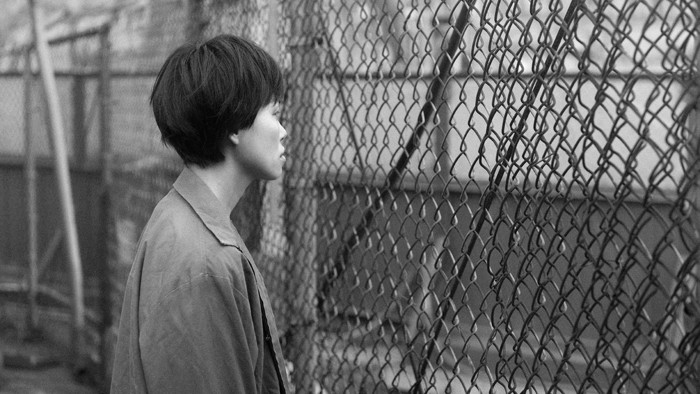
Chen Chieh-jen, Realm of Reverberations, 2014, still.Courtesy of the Chen Chieh-jen Studio.
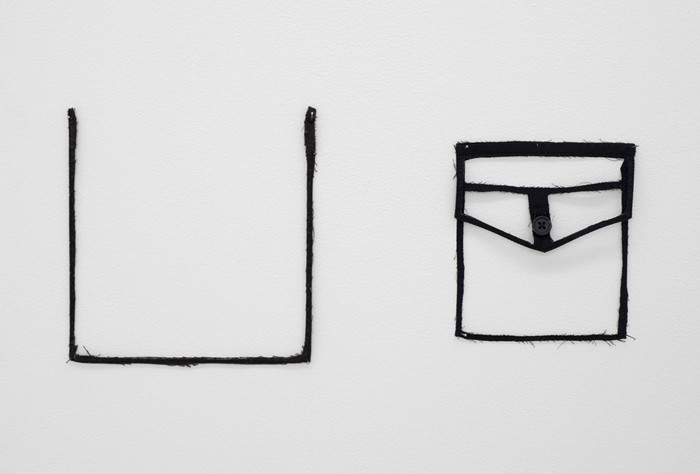
Pip Culbert, Black, open top, Black, with button, 2012. Fabric, cotton Courtesy of Hopkinson Mossman.
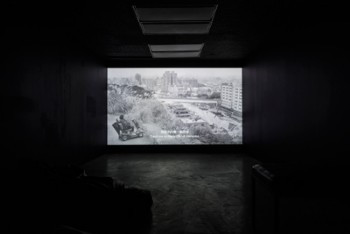
Chen Chieh-jen,
Realm of Reverberations
July 1 - August 27, 2016
Realm of Reverberations (2014) 104 Mins, Taiwanese, Chinese with English subtitles, single channel video with sound. Installation view.
Pip Culbert
Seams
July 1 - August 27, 2016
Open Shirt – limited Edition – Mr Harry, detail, 1992, cotton and buttons, 1030 x 1000mm
Chartwell Collection, Auckland Art Gallery Toi o Tamaki, 1994
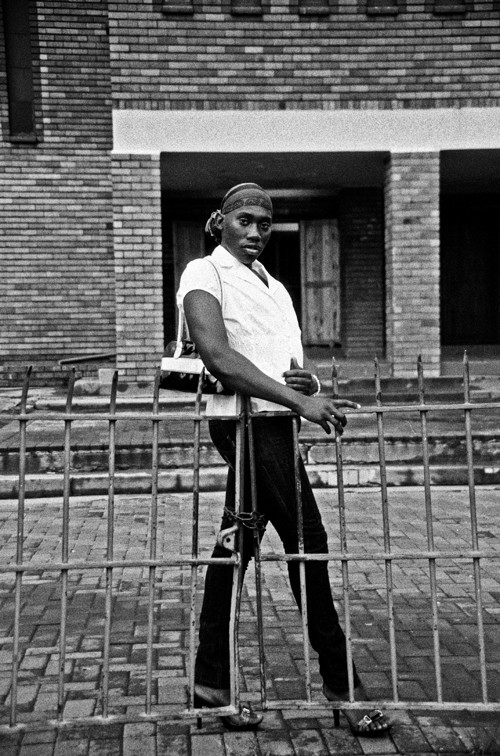
Sabelo Mlangeni, Xolani Ngayi, eStanela, (2009) from the Country girls series
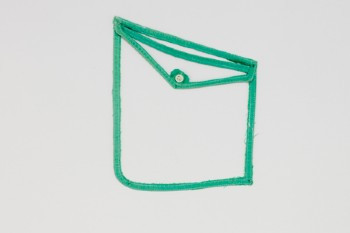
Pip Culbert
Seams
July 1 - August 27, 2016
Pocket, (2001-2014). Courtesy of Pip Culbert Estate and Hopkinson Mossman, Auckland
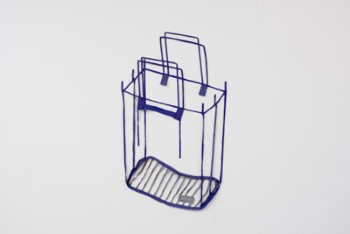
Pip Culbert
Seams
July 1 - August 27, 2016
Purple Bag, 2010, nylon, zip, label, pins, 600 x 500mm
Courtesy Pip Culbert Estate and Hopkinson Mossman, Auckland
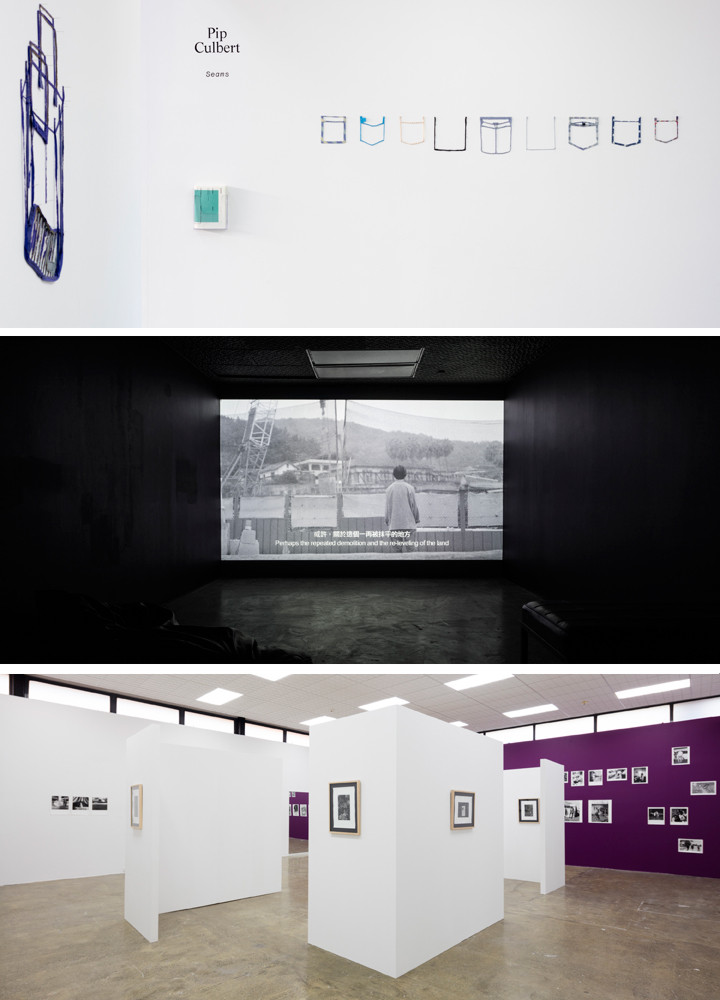
Chen Chieh-jen
Pip Culbert
Sabelo Mlangeni
Solo presentations from Chen Chieh-jen, Pip Culbert, and Sabelo Mlangeni take place within the framework of “Singular Pluralities ∞ Plural Singularities”, a series of solo exhibitions which began in 2015. Focusing on artistic research and exhibition methodology, the series experiments with installation strategies, and event structures. Through the three parallel exhibitions, Artspace explores studio processes and artistic approaches in conversation with the audience.
For the solo presentation by Chen Chieh-jen, Artspace NZ showcased his exceptional film “Realm of Reverberations” (2014) within a cinematic environment architecturally designed for this piece.
Chen Chieh-jen (b. 1960, Taiwan) lives and works in Taipei. Chieh-jen’s work considers both ideological and political issues surrounding his native Taiwan’s modern history: from colonialism to its present role as a key base in global-capitalist production. With a focus on large-scale video work, Chieh-jen highlights current social issues by interrogating the power structures that determine how histories are written and collective memories are formed.
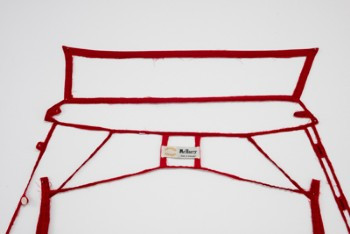
Pip Culbert’s exhibition takes its title from the central motif in the artist's practice: seams. Deconstructing clothes, bags, tents, and other textile based objects, gleaned by the artist over time, main structural lines of these forms remain. Objects are transformed into conceptual ‘ghosts’, the forms are reduced to archetypes. Just as a chair is not merely a chair for Joseph Kosuth, and a pipe is not just a pipe for René Magritte; these are not only skirts, pockets, bags, they are much more.
Like strong shadows or characteristic silhouettes, Culbert's works appear as both painterly and sculptural forms. Seams hold different layers of fabric together with stitches, and Culbert follows their tracks to achieve her ‘soft’ sculptures. Culbert reverses the process of any tailor or machine; there is a modesty and economy of form - it is a process of relief. Drawing from a range of works dated 1992 to 2014, the exhibition celebrates the subtle nuances of Culbert’s practice. As a parachute bomber sits on a wall rather innocuously opposite Culbert’s re-purposed pocket seams one can detect within these works the current political demands our world is facing; from war, political conflict, poverty, and austerity; all of which will shape our future.
Pip Culbert (1938—2016) lived and worked in London and the South of France. Culbert’s deconstructed fabric objects have been stripped down to their essential seams. In this exercise of recontextualising the everyday, items are reduced to their bare bones through a process of subtractive drawing that renders three-dimensional objects two-dimensional.
Sabelo Mlangeni’s solo exhibition entitled Heartbreaker at Artspace NZ brings three different photographic series within specific installation techniques designed for each body of work. Firstly, a select list of images from The Garden of Eden series, taken in Berlin’s Tiegarten, are installed in an abstracted maze-like formation – a kind of labyrinth in the middle of the space that functions as a reference to the nature of the park; its convoluted mix of paths and partially obstructed sightlines, where one catches glimpses of human activity and movement. During a residency in Berlin, while living close to Tiergarten, Mlangeni observed evidence of cruising and sexual activities. His series documents the invisible life and action through its left over traces.
The exhibition also presented photographs from the series Country Girls, 2003-2009 taken in small towns in the province of Mpumalanga: namely, Driefontein, Ermelo, Bethal, Platrand, Piet Retief, Standerton, and Sekunda – all nodes of mining, agriculture, forestry, and coal-fed power stations. Within these environments, township life is both rough and poor. Yet Mlangeni’s portraits of queer rural life provide an image of glamour that defies the bleakness of its surroundings. Within these glimpses of everyday life a sense of intimacy, attachment, and communal solidarity announces itself.
Selected images from the series Isivumelwano: An Agreement, 2003-2014 shot at various Southern African wedding ceremonies, were exhibited within a custom-built mirrored installation. Mlangeni notes how he first used a camera at a wedding in 1997 but unfortunately never had the opportunity to see the fruits of his labour as the bride picked the images straight from the lab. This series is therefore borne out of an attempt to reprise a moment lost. Not only does the series depict a union between two, it captures the communities gathered for these ceremonies in its role as a cultural document of the associated ritual and pageantry.
Finally, Mlangeni presents a work-in-progress – taken on Auckland’s Karangahape Road (K’Rd) – through an interactive presentation of a selected contact sheet displayed on a light box and viewable through a loupe.
Sabelo Mlangeni (b. 1980, South Africa) lives and works in Johannesburg. Mlangeni uses black-and-white photography to document and capture aspects of contemporary South African society in the decades following the abolition of apartheid. His subject matter ranges from queer communities in rural locales, members of the urban working classes as well as several other groups whose presence is often marginalised.
Supported by Auckland Council and Creative New Zealand. With special thanks to AsiaNZ Foundation